What Your Dentist Looks For Before Wisdom Teeth Removal
Wisdom teeth tend to arrive with a reputation. Patients often walk into the office expecting bad news, assuming those last molars are automatically headed for extraction. Sometimes they are. Sometimes they are not. The decision is rarely based on one X-ray or one complaint. Before recommending Wisdom Teeth Removal, a dentist or oral surgeon is weighing anatomy, timing, symptoms, and risk in a fairly careful way.
That evaluation matters because removing wisdom teeth is still a surgical procedure. Even routine cases involve planning around nerve position, sinus anatomy, gum health, the angle of eruption, and the patient’s medical history. On the other side of the equation, keeping problematic wisdom teeth can create a slow, expensive mess: cavities in hard-to-clean areas, damage to neighboring molars, recurring gum infections, or pain that shows up just when life gets busy.
In practice, the pre-removal assessment is less dramatic than people expect and more detailed than most realize. A dentist is not simply asking, “Do these teeth hurt?” They are asking whether the teeth can erupt normally, whether they are healthy, whether they threaten nearby structures, and whether this is the right time, if surgery is needed at all.
It starts with the patient in the chair, not the X-ray on the screen
The X-ray gets attention because it makes the hidden visible, but the exam begins with the person. Dentists listen for a pattern in the symptoms. Is there pressure at the back of the mouth, occasional swelling, a Wisdom Teeth Removal bad taste, jaw stiffness, food trapping behind the second molars, or episodes of gum tenderness that come and go? Those details help separate a short-lived irritation from a tooth that keeps causing trouble.
Age also shapes the discussion. Late teens and early twenties are common years for evaluation because the roots may still be forming and the bone tends to be less dense than it is later in adulthood. That does not mean everyone in that age group needs surgery. It means that, if removal becomes necessary, the procedure can sometimes be simpler and recovery a bit smoother. Older adults can still do very well, but fully formed roots and denser bone may change the complexity.
Dentists also pay attention to how much room there appears to be in the jaw. Some patients have wisdom teeth that erupt into decent positions and function like ordinary molars. Others simply do not have enough space. In those cases, the tooth may remain trapped under the gums or bone, partly emerge at an awkward angle, or crowd Wisdom Teeth Removal the area behind the second molar where cleaning is difficult.
A brief clinical exam often reveals clues that patients miss. Inflamed gum tissue over a partially erupted tooth, a pocket that traps debris, tenderness when the area is pressed, or decay beginning on the back of the second molar can all change the recommendation quickly.
Position and angulation tell a big part of the story
The term “impacted” gets used a lot, sometimes too loosely. In practical terms, a wisdom tooth is impacted when it cannot erupt normally into a functional position. The reason might be lack of space, the wrong angulation, obstruction by bone or soft tissue, or a combination of those factors.
A dentist studies the way the tooth is sitting. A wisdom tooth may be vertical, which is the most intuitive orientation, but still fail to erupt because there is nowhere for it to go. It may tilt forward into the second molar, which often raises concern because that contact point can damage the tooth in front of it. It may tilt backward, lie almost sideways, or remain buried in bone.
This angle matters for two reasons. First, it predicts future trouble. A tilted tooth pushing against the second molar is less likely to become a harmless bystander. Second, it affects the surgery itself. Teeth that are deeply embedded or positioned awkwardly may need sectioning, bone removal, or a more careful flap design to access them safely.
It is common for patients to ask why a painless impacted tooth might still be discussed. The answer is that some of the most significant problems develop quietly. A wisdom tooth can contribute to a cavity or periodontal defect on the second molar without causing much pain early on. By the time symptoms become obvious, the easier opportunity to prevent damage may have passed.
The amount of eruption matters more than many people think
Fully erupted wisdom teeth and partially erupted wisdom teeth can behave very differently. A fully erupted tooth that is straight, cleanable, decay-free, and biting properly may not need to be removed. That is the minority of cases dentists hope for. When that happens, the conversation often shifts from surgery to monitoring and home care.
Partially erupted teeth are a different category. They are the classic setup for pericoronitis, an inflammation or infection of the gum tissue around the crown. Food debris and bacteria slip under the gum flap, the tissue swells, and the patient notices soreness, difficulty chewing, bad breath, or even limited mouth opening. Sometimes the symptoms settle down with irrigation and improved hygiene, then flare again weeks or months later. That stop-start pattern is exactly the kind of history that makes dentists concerned.
From a practical standpoint, a partially erupted lower wisdom tooth is often harder to manage long-term than patients expect. The back corner of the jaw is already difficult to reach with a toothbrush and floss. Add swollen tissue and an awkward tooth angle, and daily cleaning becomes unreliable. The tooth may not be severely infected at every visit, but if the area keeps breaking down, the dentist begins to see the problem as structural rather than temporary.
The neighboring second molar often drives the decision
Patients tend to focus on the wisdom tooth itself, but dentists often worry just as much about the tooth in front of it. The second molar is usually the more valuable tooth from a long-term functional standpoint. If an impacted or partially erupted wisdom tooth is threatening that second molar, the threshold for removal gets lower.
There are a few common ways this happens. Food and plaque can collect where the wisdom tooth presses against or crowds the second molar, leading to decay in a spot that is hard to repair. Gum inflammation can deepen a pocket behind the second molar, which can compromise the bone support there over time. In some cases, the pressure or positioning contributes to root damage, though that is less common.
A small cavity on a wisdom tooth is one thing. Decay on the distal, or back, surface of a healthy second molar is another. Those restorations can be technically difficult because of access, and if the damage extends below the gum line, treatment becomes even more challenging. Many dentists would rather remove the source of the problem before a salvageable second molar turns into a more expensive and fragile tooth.
Imaging is where the hidden risks come into focus
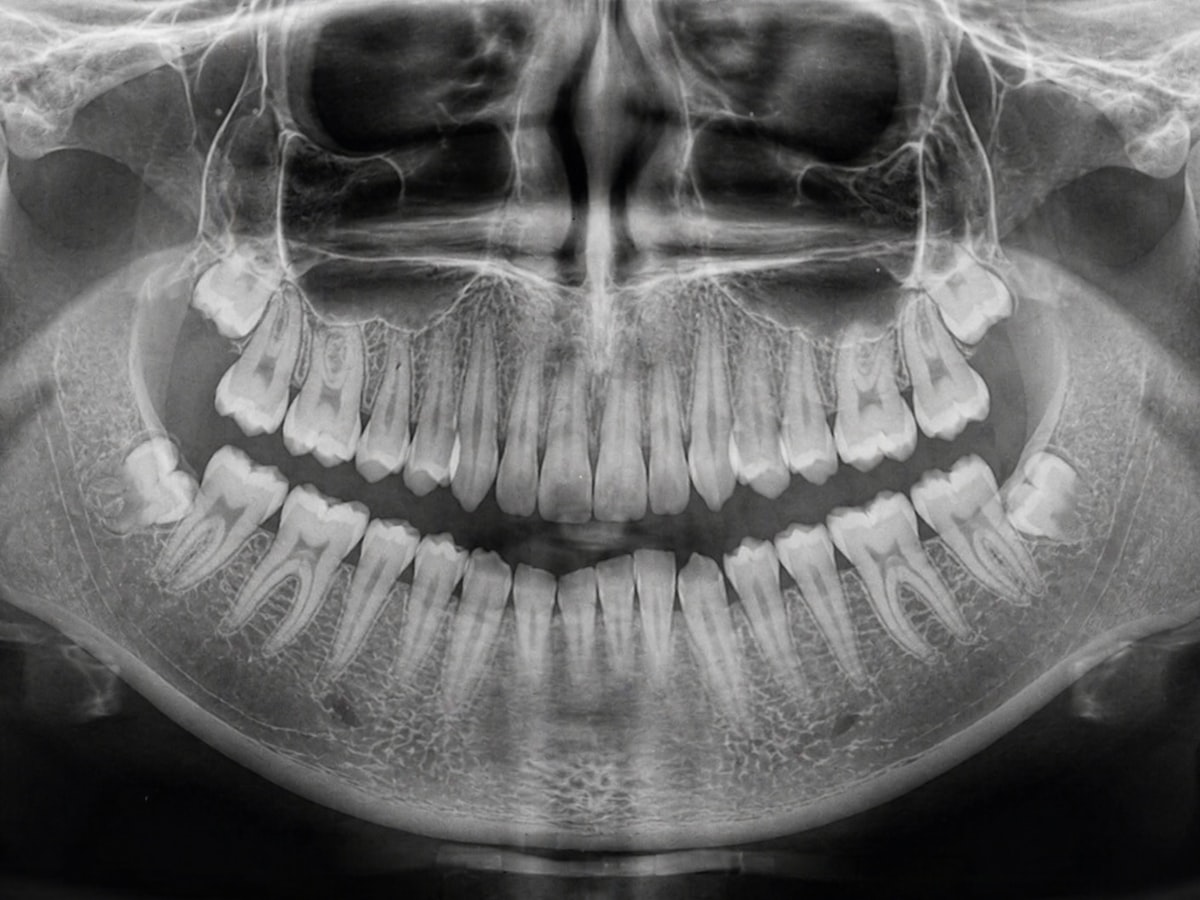
Dental X-rays are central to the decision, but not all images answer the same questions. A standard panoramic X-ray is often enough to show the overall position of the wisdom teeth, root development, relation to the jawbone, and proximity to major structures. If the case appears straightforward, that may be all that is needed.
When the lower wisdom teeth look very close to the inferior alveolar nerve, or when the upper teeth seem near the sinus in a way that could complicate removal, a three-dimensional scan may be recommended. Not every case needs that extra imaging. It is usually reserved for situations where the anatomy on a regular film leaves important uncertainty.
A dentist reviewing images is often looking for several things at once:
- Whether the tooth is fully in bone, partly in bone, or mostly erupted
- How close the roots are to the nerve canal in the lower jaw
- Whether the upper roots project toward the maxillary sinus
- The shape, number, and curvature of the roots
- Signs of cysts, decay, bone loss, or damage to nearby teeth
Those details influence both the recommendation and the referral. A simple erupted wisdom tooth may be removed by a general dentist who does these cases regularly. A deep impaction close to the nerve is more likely to be referred to an oral surgeon because the risk profile and technical demands are different.
Lower nerves and upper sinuses are not abstract concerns
Patients often hear about “the nerve” or “the sinus” without much explanation. From the clinician’s point of view, these are not scare tactics. They are structures that need to be respected during treatment planning.
For lower wisdom teeth, the concern is usually the inferior alveolar nerve, which runs within the jaw and provides sensation to the lower lip and chin. If a wisdom tooth’s roots are very close to that canal, the risk of temporary numbness rises, and in rare cases the numbness can be long-lasting. The exact degree of risk depends on the anatomy and the surgical approach. That is why a dentist studies root shape and canal overlap so carefully before proceeding.
For upper wisdom teeth, the maxillary sinus may be relevant. Some upper roots sit near the sinus floor. Most extractions in that area heal without issue, but close sinus relationships can change the technique, the informed consent discussion, and the postoperative instructions. A patient with chronic sinus problems may have additional questions worth addressing before surgery.
This planning step is one reason a good consultation can feel a little slower than patients expect. The clinician is not stalling. They are matching the anatomy to the safest path.
Current symptoms matter, but recurring symptoms matter more
One of the most useful parts of the evaluation is the timeline. A patient who had one sore week during eruption and has been fine ever since may be managed differently from a patient who gets swelling every few months. The first scenario may call for observation. The second often points toward a problem that is likely to repeat.
Dentists look for patterns such as repeated gum infections, pain that radiates to the ear or jaw angle, difficulty opening wide, or frequent food trapping. A patient may describe it casually, saying the area “acts up once in a while.” Clinically, that phrase can mean the tissue has never really stabilized.
There is also a difference between pain caused by the wisdom tooth and pain that is merely nearby. Clenching, temporomandibular joint irritation, sinus pressure, and decay in a different molar can all mimic wisdom tooth symptoms. A careful dentist tries to sort that out before recommending surgery. Not every ache at the back of the jaw is a surgical problem.
Oral hygiene and cavity risk are part of the calculation
A wisdom tooth that might be technically savable is not always practically maintainable. Dentists spend a lot of time thinking about what the patient can realistically keep clean over years, not what looks acceptable on the day of the exam.
If the area behind the second molar is very difficult to brush, if the patient already has a history of cavities, or if the wisdom tooth is only partly accessible, the odds of future decay rise. This is not a judgment on effort. Some positions are simply poor candidates for long-term hygiene. Even motivated patients can struggle with a lower wisdom tooth that sits half under gum tissue and angles into the cheek.
That judgment becomes even sharper when early damage is already visible. A small cavity in a fully erupted upper wisdom tooth may be manageable. A cavity in a partly erupted lower wisdom tooth with inflamed surrounding tissue is less reassuring, because restoring it may not solve the underlying access and hygiene problem.
Medical history changes both timing and technique
Before Wisdom Teeth Removal, the dentist is also screening for conditions that make surgery riskier or require coordination. This part of the work can feel routine to patients, but it is essential. Bleeding disorders, certain heart conditions, pregnancy, diabetes that is not well controlled, immune suppression, and a history of problems with anesthesia all affect planning.
Medications matter too. Blood thinners may require a conversation with the prescribing physician. Some drugs that affect bone turnover can influence healing decisions. Even common medications and supplements can change the bleeding picture more than patients realize, which is why dentists ask for a full list rather than only prescription names.
Smoking and vaping come up because they can impair healing and increase the chance of dry socket, especially after lower extractions. This is one of those discussions patients sometimes brush off until they have lived through a difficult recovery. Clinicians raise it because the postoperative difference can be real.
When an active infection is present, the timing may shift. Sometimes the tooth can still be removed promptly. In other cases, the dentist may first calm the infection, improve mouth opening, or reduce inflammation before surgery. That choice is based on judgment, not a rigid rule.
Orthodontic history and future dental plans can influence the decision
Wisdom teeth often enter the conversation around braces, retainers, or crowding concerns. Patients commonly assume wisdom teeth are the main reason front teeth shift. The reality is more nuanced. Lower front crowding can increase over time even in people without wisdom teeth, so dentists try not to promise that extraction will preserve alignment by itself.
That said, if a patient is finishing orthodontic treatment, has little posterior space, and already shows signs of impaction or hygiene problems, the timing of removal may make practical sense. Dentists also consider future restorative plans. If there is work needed on second molars, crowns being planned, or periodontal concerns in the back of the mouth, keeping a problematic wisdom tooth can complicate everything around it.
This is where experience shows. Good treatment planning is not just about the wisdom teeth in isolation. It is about what keeping or removing them does to the rest of the mouth over the next five to ten years.
Not every wisdom tooth should come out
This point surprises some patients, but it is important. Dentists do not automatically remove every wisdom tooth they see. If a wisdom tooth is healthy, fully erupted, in functional position, easy to clean, free of gum disease, and not harming adjacent structures, monitoring may be entirely reasonable.
That approach requires honesty from both sides. The patient needs to keep the area clean and show up for periodic exams. The dentist needs to watch for change rather than treating the tooth as invisible because it is asymptomatic today. There are people who keep their wisdom teeth for life without incident. There are also people whose “quiet” third molars become the source of a hard-to-fix cavity on a second molar. The difference is often found in follow-up, anatomy, and hygiene.
A balanced consultation should include the downside of both options. Surgery has cost, recovery, and possible complications. Delaying or avoiding surgery may preserve comfort in the short term but allow a deeper problem to develop. The recommendation should fit the actual findings, not habit.
Questions worth asking at the consultation
A strong pre-surgical conversation usually leaves the patient knowing not only whether removal is recommended, but why. If the reasoning feels vague, ask for clarification. Most clinicians appreciate specific questions because it means the patient is engaged in the decision.
Here are a few useful ones to bring into the room:
- Are my wisdom teeth causing a problem now, or are you concerned about future risk?
- What do you see on the X-ray that makes removal advisable or unnecessary?
- How close are the roots to the nerve or sinus?
- Would you expect a straightforward extraction or a surgical extraction?
- Is there any benefit to removing these now instead of monitoring them?
Those questions tend to shift the conversation from general reassurance to concrete planning. Patients usually leave with a better sense of timing, complexity, and whether a referral to an oral surgeon is the best next step.
What a thoughtful recommendation usually sounds like
When a dentist has done a careful evaluation, the advice is usually specific. It sounds like, “Your lower right wisdom tooth is partially erupted, the gum keeps getting inflamed, and I can already see a pocket forming behind the second molar. I think removal is the best way to protect that tooth.” Or, “Your upper wisdom teeth are fully erupted, cleanable, and not causing damage, so I am comfortable monitoring them.” That level of detail matters.
Vague recommendations often create mistrust because patients cannot tell whether surgery is being proposed out of caution, habit, or necessity. A detailed explanation shows that the decision is tied to anatomy and risk, not just a generic protocol.
From the clinician’s side, the goal is straightforward: preserve the healthiest long-term result with the least unnecessary intervention. Sometimes that means scheduling Wisdom Teeth Removal before the next semester starts or before a recurring infection becomes a larger problem. Sometimes it means doing nothing more dramatic than keeping an eye on the area at regular cleanings.
What your dentist looks for before wisdom teeth removal is not one red flag, but a pattern. Position, access, symptoms, imaging, age, adjacent tooth health, and medical factors all feed into the final recommendation. Once you know what they are evaluating, the process makes a lot more sense, and the decision tends to feel less mysterious than it did at the start.
Oxnard Dentistry
1730 E Gonzales Rd, Oxnard, CA 93036, United States
+1 805-307-8731
FAQ About Wisdom Teeth Removal
How painful is it to remove a wisdom tooth?
Local anesthetic numbs the area during extraction. Pressure may still be noticeable; tell the dentist if you feel pain. Soreness and swelling afterward are common. Follow the pain-control instructions provided for your situation.
How long is recovery for wisdom teeth extractions?
Recovery varies with the tooth position and complexity of the extraction. Some people resume routine activities quickly, while others need several days of rest. Soreness, swelling and jaw stiffness can last up to two weeks. Follow your clinician's aftercare and activity advice.
What are the risks of wisdom tooth removal?
Possible complications include dry socket, infection, persistent bleeding and changes in sensation from nearby nerve injury. Your dentist or oral surgeon should explain your individual risks before treatment. Seek prompt dental advice for bleeding that will not stop, fever, or severe or worsening pain and swelling.