What Makes Veneers in Oxnard CA So Effective?
A great veneer case rarely starts with porcelain. It starts with diagnosis.
People often assume veneers are effective because they create a bright, even smile quickly. That is true, but it is only part of the story. Veneers work so well when they are planned carefully, matched to the patient’s bite and facial features, and placed for the right reasons. In a place like Oxnard, where people are balancing professional life, family life, and a coastal lifestyle that keeps them visible and social year-round, cosmetic dentistry tends to be judged by a high standard. Patients do not just want white teeth. They want teeth that look believable, feel comfortable, and hold up.
That is where the real effectiveness of veneers comes from. They solve several problems at once. A well-designed veneer can improve color, shape, proportion, minor alignment issues, and edge wear without forcing the patient into a longer or more invasive treatment than necessary. When done properly, veneers can look remarkably natural even at conversational distance, which is where cosmetic dental work succeeds or fails in the real world.
Effectiveness starts with choosing the right problem to solve
Veneers are not a universal answer. They are excellent for some conditions and the wrong choice for others. That distinction matters.
The best veneer cases usually involve teeth that are healthy but visually compromised. Common examples include enamel discoloration that does not respond well to whitening, small chips, worn front edges, undersized lateral incisors, mild gaps, and front teeth that look uneven or slightly rotated. In those situations, veneers can change what people notice first when they see a smile, without the need for extensive reconstruction.
By contrast, if someone has active gum disease, untreated decay, heavy nighttime grinding, or a bite that places extreme stress on the front teeth, veneers alone may not be effective for long. They might still be part of the eventual solution, but only after the underlying issue is managed. That kind of restraint is one of the biggest markers of good cosmetic dentistry. A dentist who is willing to say “not yet” is often the one most likely to deliver a result that lasts.
This is especially relevant when people search for Veneers Oxnard CA because they are hoping for a cosmetic upgrade on a practical timeline. The desire for speed is understandable. Veneers can absolutely be efficient, but their success still depends on whether the teeth and gums are ready for them.
Why veneers can change a smile so dramatically
The front teeth dominate the smile. Even subtle improvements to them can make the whole face look more balanced.
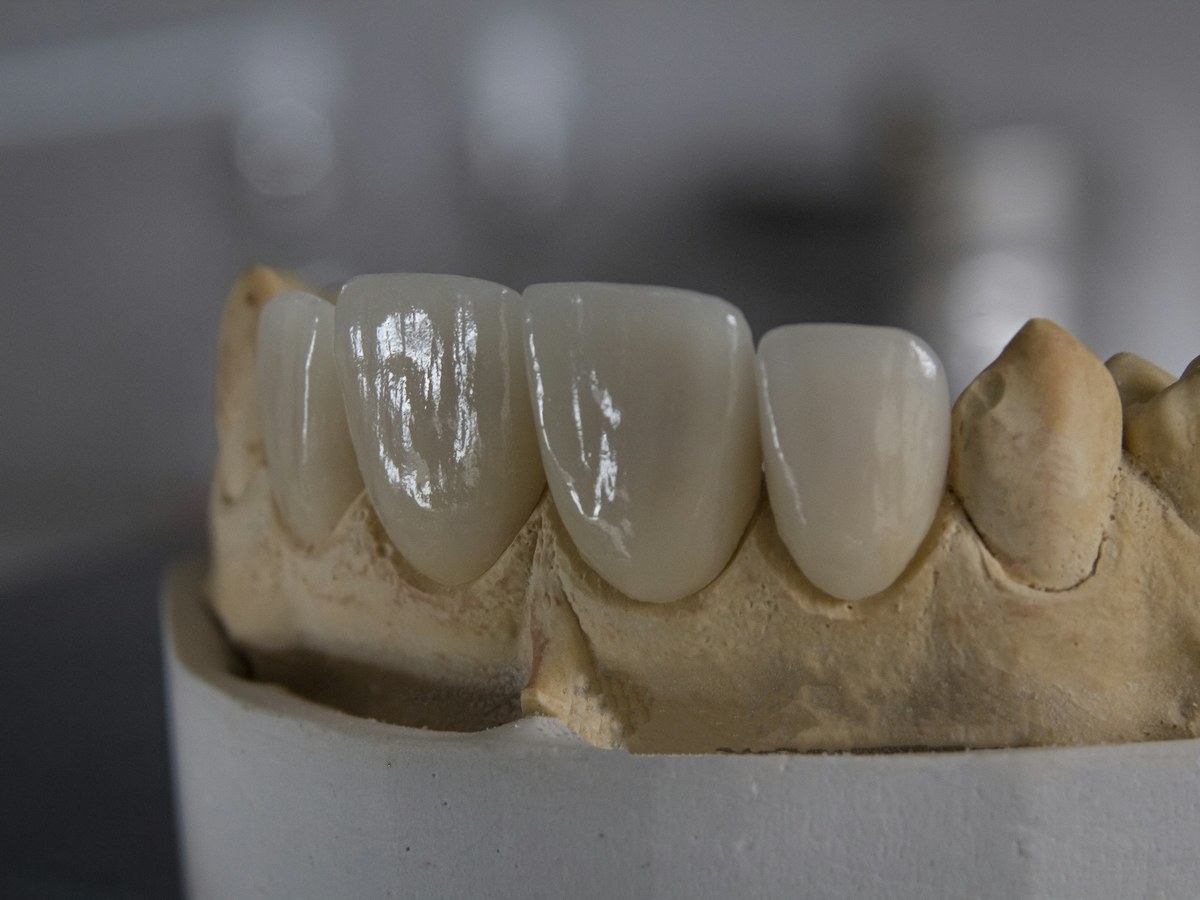
Porcelain veneers are thin restorations bonded to the visible front surface of the teeth. Because they sit on the part of the tooth that catches the eye, they can reshape the smile with a level of precision that whitening or bonding often cannot match. A skilled dentist can adjust width-to-length ratio, soften a square tooth, strengthen a weak incisal edge, close a small space, or create better symmetry from one side to the other.
That visual control is one reason veneers are so effective. Another is optical behavior. High-quality porcelain reflects light in a way that can closely resemble enamel. That matters more than most patients realize. Natural teeth are not flat white rectangles. They have translucency near the edges, depth within the body of the tooth, and subtle variation from tooth to tooth. Good veneers respect that. Poor veneers ignore it and end Veneers Oxnard CA up looking chalky or bulky.
In practice, patients often notice a deeper change than “my teeth look nicer.” They say their smile feels less distracting. They stop covering their mouth when they laugh. They smile in photos without rehearsing how much tooth to show. Those behavioral shifts are a strong sign that the treatment worked on a human level, not just a technical one.
The material matters more than the marketing
Not all veneers are created equal, and not all porcelain performs the same way.
The most effective veneers tend to be made from high-quality ceramic materials chosen for the patient’s specific needs. Some cases need more translucency for a natural look. Others require more masking power to cover dark underlying tooth structure. There is no single “best” material for every patient. The best choice depends on shade, prep design, bite force, and how many teeth are being treated.
This is one reason experienced cosmetic dentists spend so much time on records and planning. Photographs, digital scans, bite analysis, and shade communication with the lab are not luxuries. They are what allow the final result to look intentional. A veneer can be technically well bonded and still fail aesthetically if it is too opaque, too thick, or shaped without regard for the patient’s face.
Laboratory quality also plays a large role. A strong dentist-lab partnership often separates a decent case from an exceptional one. The ceramist’s work influences texture, luster, and edge detail, all of which affect whether the teeth look lively or artificial. That craftsmanship is difficult to fake. Patients may not have the vocabulary to describe it, but they can usually sense it immediately.
Conservative preparation is one of the biggest reasons veneers succeed
There was a period when cosmetic dentistry was sometimes associated with aggressive tooth reduction. That reputation still lingers, even though modern veneer dentistry has moved toward a more conservative approach whenever possible.
Effective veneers preserve as much healthy tooth structure as they can. Bonding to enamel is generally more predictable than bonding deep into dentin, and preserving enamel supports both longevity and comfort. In practical terms, that means the dentist is not simply making teeth smaller to fit porcelain over them. The goal is to create space where needed, maintain natural contours, and avoid unnecessary removal of sound structure.
Some patients are even candidates for very minimal-prep or no-prep veneers, though those cases have to be selected carefully. Not every smile benefits from adding material to the front of the teeth. If the natural teeth already project forward, adding veneers without creating space can make them look bulky. Judgment matters here. Conservative treatment is not about doing as little as possible. It is about doing exactly what the case requires, no more and no less.
Local lifestyle and expectations in Oxnard shape what “effective” really means
Cosmetic dentistry is never purely cosmetic. It sits inside a person’s daily life.
In Oxnard, patients often want results that hold up in Veneers Oxnard CA bright sunlight, at work, at community events, and in casual close-range interactions. Beach and outdoor living create a different test for veneers than dim indoor settings do. Overly opaque restorations can look particularly obvious in natural daylight. So can veneers that are too uniform in shape or color.
That is one reason natural aesthetics matter so much in Veneers Oxnard CA cases. People are not just seen in controlled office lighting. They are seen at soccer games, on patios, at weddings, and in family photos taken at noon. Teeth need to look good in motion and in varied light, not just in a before-and-after image.
There is also a practical side to local expectations. Patients often want treatment that fits into demanding schedules. Veneers are effective partly because they can deliver broad cosmetic improvement in a relatively compact treatment sequence compared with orthodontics plus whitening plus bonding revisions over time. That efficiency appeals to busy adults, but it only stays effective if the planning remains disciplined. Fast should not mean rushed.
Veneers do more than whiten teeth
Whitening changes shade. Veneers can change architecture.
That difference explains why patients who have already whitened their teeth sometimes still feel dissatisfied. Their teeth may be brighter, but still short, uneven, chipped, or disproportionate. Veneers address those structural issues in a way bleaching never will.
A common real-world example is edge wear. Someone in their forties or fifties may have teeth that have flattened gradually from years of clenching, grinding, or simple age-related attrition. Even if those teeth are healthy, they can make the whole smile look older or tired. Veneers can restore lost length and soften the visual effects of wear while preserving much of the underlying tooth. When the smile line is rebuilt thoughtfully, the face often looks more refreshed without appearing “done.”
Another frequent situation involves one or two teeth that are naturally smaller than the others. Lateral incisors are the classic example. When they are undersized, the smile can look uneven even if everything is healthy and straight enough. Veneers can correct that imbalance elegantly, often with less treatment time than orthodontics and with more shape control than direct bonding.
Bonding science is a quiet reason veneers last
Patients usually focus on shape and shade, but one of the biggest reasons veneers are effective is the bonding process itself.
Modern adhesive dentistry allows porcelain to bond to tooth structure with impressive strength when the case is handled properly. Isolation, surface preparation, etching protocols, the choice of bonding resin, and meticulous cement cleanup all matter. These are not glamorous details, but they influence whether a veneer feels integrated or vulnerable.
A well-bonded veneer does not simply sit on the tooth like a shell. It becomes part of a carefully engineered restorative system. That contributes to strength, fit, and longevity. On the other hand, shortcuts during bonding can undermine even the most beautiful veneer from the lab.
This is one area where experience shows. An excellent cosmetic result depends on aesthetic vision, but it also depends on technical discipline during the appointment itself. Moisture control, seating sequence, and occlusal adjustment after cementation are the kinds of details that separate predictable outcomes from avoidable problems.
The bite can make or break the result
If veneers are so thin and refined, why do some fail early? Often the answer is not the porcelain. It is force.
The front teeth do not function in isolation. They guide the way the jaw moves, especially during side-to-side and forward movements. If veneers are placed without regard to that pattern, they can be overloaded. Patients may see chipping, edge fracture, debonding, or a feeling that the teeth are “hitting wrong.”
This is why bite analysis matters before cosmetic work begins. A patient with a deep bite, strong masseter muscles, or a history of grinding may still be an excellent veneer candidate, but the treatment plan may need protective steps. Those can include slight design modifications, treatment of more than just the most obvious teeth, or a nighttime guard after placement.
A short checklist helps illustrate what dentists usually evaluate before calling veneers a predictable long-term option:
- Gum health and absence of active decay
- Enough healthy enamel for reliable bonding
- Bite patterns that will not overload the veneers
- Realistic cosmetic goals and shade expectations
- Commitment to maintenance, including hygiene and follow-up
None of those points are exotic. They are simply the foundation of durable cosmetic treatment.
Customization is where effectiveness becomes invisible
The best veneers are often the ones nobody notices.
Patients sometimes arrive with a fear of getting “big fake veneers.” That concern is reasonable. Most people have seen examples where the teeth are uniformly bright, overly long, or shaped in a way that does not fit the face. Those cases are memorable for the wrong reason.
Natural-looking veneers are highly individualized. The dentist considers lip mobility, facial symmetry, phonetics, smile arc, age, skin tone, and the way the patient actually wants to present themselves. A 28-year-old media professional asking for a brighter, more polished look may need a different level of value and contour than a 62-year-old teacher who wants to look rested and healthy without drawing attention to dental work.
Temporary veneers often play a surprisingly important role here. They allow patients to test shape, length, and speech before the final porcelain is delivered. If the “s” sounds whistle slightly or the incisal edges feel too long when speaking, those are useful clues, not setbacks. Adjustments made at the temporary stage can dramatically improve the final outcome.
That try-in process is one of the least advertised but most effective parts of veneer treatment. It turns the case from a guess into a refinement.
Why veneers often outperform composite bonding
Composite bonding has an important place in dentistry. It is conservative, efficient, and often more affordable up front. In the right case, it is an excellent choice. But veneers often prove more effective when the goals are broader and the expectations are higher.
Composite resin is more prone to staining, wear, and surface dulling over time. It can chip at the edges and usually requires more maintenance if a patient wants that crisp, polished cosmetic look year after year. Porcelain, by comparison, tends to retain luster and resist discoloration better. It also allows for finer control of translucency and surface texture.
That does not mean every patient should skip bonding and go straight to veneers. A teenager with one chipped incisor is usually better served with conservative bonding. A patient testing whether they like a shape change before committing to ceramic might also start there. The more useful comparison is not “which is better in general,” but “which is better for this mouth, this budget, and this timeline.”
A second short comparison makes the trade-offs clearer:
- Veneers usually offer better stain resistance over time
- Bonding is typically easier to repair in a single visit
- Veneers provide more refined shape and light reflection
- Bonding often has a lower initial cost
- Veneers generally hold polish and edge definition longer
That kind of nuance is what helps patients make decisions they remain happy with later.
Longevity depends on habits, not just craftsmanship
Even beautifully planned veneers are not maintenance-free.
Patients who treat veneers as permanent and indestructible are more likely to run into problems. Porcelain is strong, but habits matter. Opening packages with front teeth, chewing ice, biting fingernails, and skipping cleanings can shorten the life of the work. Night grinding is especially important. Many veneer failures that appear “sudden” are actually the result of months or years of repeated stress.
With reasonable care, veneers often serve patients well for many years. The exact timeline varies based on bite, hygiene, material, and how many teeth are involved. It is more honest to discuss longevity in ranges than to promise a fixed number. Some veneers need replacement earlier because of edge damage, gum changes, or evolving aesthetic preferences. Others remain functional and attractive well beyond what the patient expected.
What matters most is that the patient understands the relationship. Veneers are durable, but they are still a collaboration between the dentist’s work and the patient’s habits.
The emotional payoff is real, but the best results stay grounded
There is a tendency in cosmetic dentistry marketing to oversell the emotional transformation. Smiles do matter. Confidence matters too. But the strongest veneer cases are usually the ones approached with calm, realistic goals.
A patient who wants to look like a slightly better version of themselves often ends up happiest. Their teeth look healthier, more proportional, brighter, and more polished, but still consistent with their face and age. Friends may comment that they look great without being able to identify exactly why. That is usually the sweet spot.
Patients chasing an abstract ideal from edited photos can be harder to satisfy because natural mouths have limits. Lip support, gum architecture, tooth position, and phonetics all place boundaries around what is smart and stable. Good cosmetic dentistry respects those limits rather than pretending they do not exist.
What makes Veneers Oxnard CA such an appealing option
When people search for Veneers Oxnard CA, they are usually looking for more than location convenience. They are looking for a treatment that feels efficient, visible, and worth the investment.
Veneers are effective because they combine several strengths at once. They can deliver a major aesthetic upgrade in a relatively short span. They can be conservative when planned well. They can look highly natural in bright, real-world light. They can address multiple concerns with one coordinated treatment. And when the bite, materials, and bonding are handled correctly, they can remain stable and attractive for years.
The deeper reason they work, though, is simpler. Veneers are effective when they are treated as precision dentistry rather than a cosmetic shortcut. The best outcomes come from matching the treatment to the patient, not the other way around.
That is what turns veneers from a trend into a reliable tool. Not hype. Not the whitest shade on the chart. Just careful planning, sound technique, and the judgment to know when veneers are the right choice and when they are not.
Oxnard Dentistry
1730 E Gonzales Rd, Oxnard, CA 93036, United States
+1 805-307-8731
FAQ About Veneers Oxnard CA
How long do porcelain veneers last?
Porcelain veneers can last for many years, but they can chip, loosen, or wear over time. Their lifespan depends on factors such as your bite, whether you grind your teeth, and daily care. Regular dental visits let your dentist check their condition.
Are dental veneers permanent?
Traditional veneers often require removing a small amount of enamel, so that change to the tooth is generally irreversible. Veneers can still need repair or replacement. Ask your dentist how much preparation your teeth would require.
How much do veneers cost in Oxnard?
Cost depends on the material, how many teeth you want treated, and whether you need other dental work first. Ask for a written estimate that explains the price per tooth and what is included.